
Late S Corp Election

Posted Friday, June 14, 2024

Table Of Contents

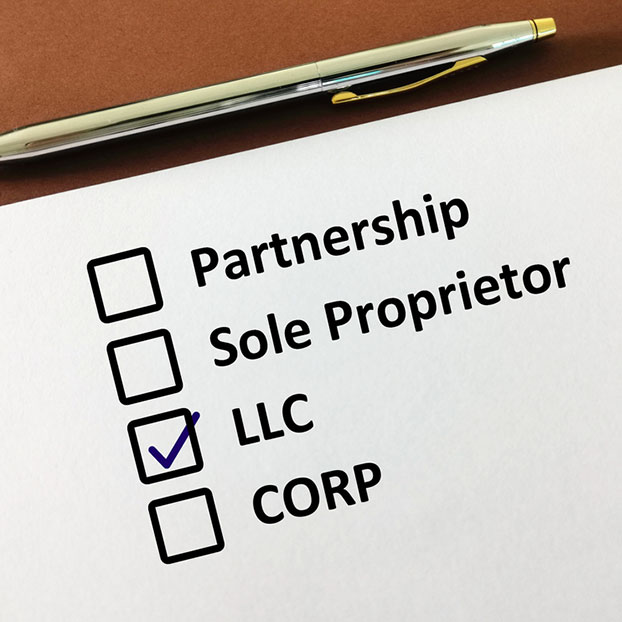
Late S Corp ElectionS Corp status back to January 2024? No problem! The late S corp election can easily be done well into 2024 for 2023 as well (but there are things to work through)! How does this fit into S Corp vs LLC discussion? The S Corp election takes your LLC (or PLLC or C Corp or PC) and changes the way it is taxed to reduce self-employment taxes. The underlying entity remains intact. Only the way it is taxed changes.

Every year for nearly two decades, WCG CPAs & Advisors has successfully prepared and filed around 150 Form 2553 S Corp elections with a 100% success rate. Zero calories. No trans fats. Sprinkle in some tax savings, and it’s pure deliciousness! Okay, maybe we got carried away, but you get the idea.

Do you remember the old Van Halen song, Hot for Teacher? “I don’t feel tardy.” We don’t want you to feel tardy about your election to be taxed as an S corporation.

So if you are past the 75 days from January 1 or business inception, no worries—in true IRS fashion there is one rule (don’t be tardy), and fifty exceptions (my dog ate it). Form 2553 is no different, but filing it late has to be done correctly, and we can help!


S Corp Benefits Summarized

Here are the quick benefits of an S Corp election:

  • Primary benefit is the reduction of Social Security and Medicare taxes (self-employment taxes).
  • You might need to process payroll (pay wages) to not be wage-limited on your Section 199A qualified business income (QBI) deduction. An LLC or a partnership cannot pay wages to its owner(s).
  • The state and local tax (SALT) workaround only works with pass-through entities (PTEs). Your LLC cannot take advantage of the SALT work-around / PTET deduction without an S Corp election.
  • Lower audit risk: Business activities reported on a Schedule C of your Form 1040 tax return tend to attract audits or IRS challenges for auto expense, meals, and travel. Your audit rate risk with an S corporation tax return is 0.4%.
  • Certain taxing jurisdictions, such as California, have an egregious tax system that penalizes LLCs with additional taxes. An S Corp election might avoid this or significantly reduce this (in California, a garden-variety LLC is a dirty word).

Do you want a more obscure S Corp benefit? Of course you do!

A Qualified Subchapter S Subsidiary, also known as a QSub or QSSS, is simply an S corporation that’s owned by another S corporation. A QSub is treated as a subsidiary of the parent S corporation. Why do you care? At times, you want to merge two businesses, but the assets are immovable (think of a Medicare certification or a specialized defense contract). You might need to S elect one before the combination because of certain rules with the merger.

You might also want to combine gross receipts for the passive investment income test, or combine basis between stock and loan basis, or combine to release accumulated earnings and profit (AE&P).

Are you regretting asking? It’s OK, we’ll move along.

S Corp Election Checklist

So we showed you all the benefits, fees and such… but we need to put the horse back in front of the carriage. Let’s go through a quick checklist to ensure we aren’t going down the wrong road. As Doc Brown in Back to the Future says, “Roads? Where we’re going, we don’t need roads.” Well, in S Corp land, we do:

  1. Does your business earn over $48,000 net income (profit) after expenses? Say yes.
  2. Are you located in New York City or Tennessee, where S corporation tax rates are egregious and suck up all the federal tax savings? New Hampshire? Portland, Oregon? Say no. Although there might be exceptions where an S Corp makes sense, NYC, TN, and NH in order to maximize Section 199A deduction benefits.
  3. Do you have other W-2 income that exceeds or comes close to exceeding the Social Security limits of $168,600 (2024)? Say No. If you say yes, we need net business income to exceed $200,000 in #1 above so that the Medicare savings exceeds the “lost” Social Security tax paid by the S Corp (huh? We can explain).
  4. Is this a going concern? In other words, is the business going to continue to earn the same income or more each year? Say Yes.
  5. Do you have an LLC or some other entity in place that can be elected to be taxed as an S Corp? Say Yes. If you say No, we have options, just not elegant ones such as Shelf Corporations.
  6. Do you have other partners besides a spouse… business partners, that is? Say No. If you say yes, are you currently splitting income based on ownership percentages or some formula? If you say Formula, then we’ll need to explore a multi-entity arrangement.
  7. Does your entity own any appreciating assets, such as real estate? Say No. We don’t put appreciating assets into an S corporation. Holding companies own real estate and operating companies elect S Corp status. Chinese Wall.

Are you still here? Excellent news… read on! You can also complete a PDF version of the above questions, and send them to us for review.

S Corp Questionnaire

Check out our S Corp questionnaire if you need help figuring them out for your business!

[page_title]

Multi-Entity Structures

Simplify your business structure without sacrificing flexibility or long-term options.

[page_title]

Multi-Entity Structures

Simplify your business structure without sacrificing flexibility or long-term options.

Common S Corp candidates and current clients for WCG are consultants, engineers, financial advisors, physicians, chiropractors, doctors, surgeons, anesthesiologists, nurse anesthetists (CRNA), insurance agents, attorneys, photographers (the profitable ones), online retailers, FBA retailers, real estate agents, good, old-fashioned widget makers, among several others. We also have many medical groups and financial advisor teams. Yes, even those deemed to be specified service trades or businesses still benefit with Section 199A coupled with an S Corp election! Double your pleasure.

Does an S Corp Make Sense?

Joseph Bassett, known around the WCG kegerator as Joey, outlines the 185 reasons you might not want to be an S corporation. That’s not entirely true. Yes, we call him Joey. That’s true. But… he only outlines about 7 different considerations from income levels, to locations, to multiple business owners, to all kinds of things. S Corp elections can be great… but they must be vetted to ensure that a half-baked idea becomes a good idea.

Late S Corp Election Advantages

As you know, being taxed as an S Corp has huge tax savings because you avoid self-employment taxes. Through an S Corp election you are limiting the amount of income subject to Social Security and Medicare taxes which are bundled to be called self-employment taxes. The savings are easily 8-10% of your net business income after expenses (based on $100,000 net biz income). In other words, if you earn $100,000 in net business income after expenses, your tax savings with an S Corp election could be $8,000 to $10,000. This is the big difference when considering the S Corp vs. LLC discussion.

This article is about late S corporation elections and not a drill-down of the nuts and bolts tax savings. If you need more information on how this works and other S corporation advantages, click on the button below:

[page_title]

Avoid Self Employment Tax

The S Corp election is applied to an underlying entity with the primary purpose of reducing self-employment taxes. Learn more!

Still not sure or not convinced? No problem! Please check out Line 4 on Schedule 2 of your Form 1040 tax return. This number reflects the self-employment taxes paid on your business income. We want to reduce this by 60 to 65%. So, if this number is $15,000 then we probably get this down to about $7,000 or so which suggests an $8,000 tax savings.

Form 2553 (the S Corp election form) must be filed with the IRS which tells the IRS that your entity (LLC, partnership or C corporation, and the professional variants) wants to be taxed as an S corporation. It is typically due within 75 days of forming your business entity or the start of your fiscal year, however, there is relief for the late filing of Form 2553 and WCG can guide you through that. IRS Revenue Procedures 2003-43 and 2004-48 used to be the governing rules, but the IRS has simplified the procedure (imagine that!).

IRS Revenue Procedure 2013-30, effective September 3, 2013, allows an entity to get relief and file a late S Corp election within 3 years and 75 days from the date the election was originally intended to be effective. Holy cow. Three years! The IRS is basically saying that if you walk, talk and smell like an S Corp, then you are an S corporation.

Self-Employment TaxSo, if it is November 2023, and you want to go back to January 1, 2023 for setting up S corp status, no problem. We prepare and file Form 2553 under IRS RevProc 2013-30, open payroll accounts in your home state (yup, payroll!), process a payroll event that encompasses the entire year and you get a nice W-2. Done! All that is left is preparing your S corporation tax return on Form 1120S and your individual tax return.

What happens if it is too late to open payroll accounts and process a 2023 payroll? Typically, we issue a 1099-NEC from the S Corp to you, the human, to simulate shareholder payroll. This is first-year mulligan stuff, and the following year and beyond, proper payroll must be processed. Yes, complete with pay stubs and a W-2. At times, we manually process a late payroll event, but that is usually because of Section 199A Qualified Business Income Deduction benefits. More on this in a bit.

Let’s talk about the fees. here is a snapshot of our fees to do all this for you:

  • Late S Corp Election, $600 ($450 for timely elections), $1,200 if after March 1, 2024 (we can explain why)
  • Payroll Setup, $550 (CA, CO, TX easier… NY and PA, rough, like a stucco bathtub)
  • Q4 Payroll Event and Tax Planning, $850 (or $450 if we skip tax planning)

Five states require a separate S corporation election form to be filed: Arkansas (really?!), New York, New Jersey, Ohio and sometimes Wisconsin.

If you live in a community property state such as Arizona, California, Idaho, Louisiana, Nevada, New Mexico, Texas, Washington and Wisconsin your spouse might need to sign the Form 2553 even if he or she is not a shareholder. As a side bar, community property laws originate from Spanish property laws which is why most of our bordering states are community property states (red does not mean Republican). Wisconsin has no excuse, and Idaho was just caught in some peer pressure from Washington and Nevada.


2024 Late S Corp Election in 2025

Another scenario! Let’s say it is March 2024 (tax season) and you’re freaking out because you forgot to make the S Corp election earlier. You can still file a late S Corp election Form 2553 back to January 1, 2023 but there are hiccups. Isn’t hiccups such a friendly word? Sort of like bumps in the road. No one says pitfalls or disasters anymore, just hiccups.

Bottom line is, we can engage in some revisionist history on March 1, 2025 and simulate Shareholder Wages / Officer Compensation for December 31, 2024 via a 1099-NEC issued from your S Corp to you individually. No worries, this is a one-time mulligan. We have been successfully, legally and ethically doing this since 2007 under IRS guidance. You’ll need real payroll and a real W-2 in 2025 so brace for that required impact. Here are our transparent fees:

  • Prior Year Late S Corp Election, $600 if can file by March 15, otherwise $1,200 (we can explain why)
  • Officer Compensation via 1099, Tax Planning, End of Year Tax Moves, $850
  • 2024 Corporate and Personal tax returns, typically about $2,300 for both

Total out the door for 2024 is $3,750. So, if you have $100,000 in net business income after expenses, you’ll still pocket about $5,000 after our fee and your S corporation will be set up and ready to go for 2024 and 2025 (you still need payroll setup). Boom! Economists love cost-benefit stuff. Other humans just like money.

If your current CPA or tax professional says No, we suggest you find a new accountant (or at least educate him or her). WCG and other reputable CPA firms have been doing this for nearly two decades (there was relief provisions prior to the 2013 issuance of IRS Rev Proc 2013-30) without major problems.

Three things happen simultaneously with a prior year late S Corp election:

  • Completing Form 2553 including the reasonable cause letter,
  • Determining reasonable Shareholder Wage / Officer Compensation, and
  • Preparing the S corporation’s tax returns (Form 1120S)

Since the IRS is a huge organization, the right hand doesn’t always talk to the left hand. Shocking, we know. Additionally, the IRS is bound by regulation to process Form 2553s within 60 days. However, they don’t, and they are taking about 4–6 months as of this writing. Therefore, after Thanksgiving, we electronically attach the late S Corp election to the tax returns, and file them together. Before that, we can fax Form 2553 with good success.

Why do you care? We cannot attach the late S corporation election form to an extension. There are three scenarios with varying elegance:

  1. File Form 2553 before Thanksgiving. You can likely extend your S Corp tax returns (if you need to). Elegant.
  2. After Thanksgiving, prepare both the tax return and election paperwork for the S Corp. File together by March 15. Also, elegant.
  3. After Thanksgiving, and you need to extend for whatever reason. This gets messy. We will attempt to extend the tax return, but it will be rejected because of an entity mismatch in the IRS database (however, we have a time and date stamp akin to the lite version of a get out of jail free card). We file in the summer, and that kicks off a nastygram about late filing penalties, etc. Next, we use our time and date stamp as proof of our attempt to file a timely extension. All this works, but it does take extra brain cells (40-50 new S Corps find themselves in this bucket each year at WCG CPAs & Advisors, so you won’t be alone).

Late S Corp Election

Latesha Anderson and Joseph Bassett of WCG CPAs & Advisors take you through the late S corporation election. Yes! You can go back to January of last year and elect S Corp tax status. Yes, there are very specific IRS revenue procedures to accomplish this and some important timelines. Yes, we can help but this video gives you a wonderful overview.

Section 199A Deduction

Section 199A deduction also known as the Qualified Business Income deduction (QBID) arises from the Tax Cuts & Jobs Act of 2017. This is a significant tax break for small business owners, but there are rules and limits of course. We have written a short article which outlines what is considered a qualified business for the qualified business income deduction including the dreaded specified service trade definitions (which is easily summed up as “any trade or business where the principal asset is the reputation or skill” of the owner). All this stuff is in our book as well!

Click on the button below for our articles:

[page_title]

Section 199A Deduction General

Find helpful insights, summaries, and resources to understand this important tax benefit!

[page_title]

Section 199A and S Corps

Learn about the Section 199A Qualified Business Income Deduction, a key tax benefit.

[page_title]

Section 199A and Rentals

Learn about Section 199A’s 20% deduction for small business owners and rental income.

Even with Section 199A, S corporations remain a critical tax saving tool for two reasons. First, the usual self-employment tax savings remains intact for all business owners including specified service trades or businesses. Second, a business owner might need to pay W-2 wages to himself or herself to not be limited by income, and only corporations can pay W-2 wages to owners (in other words, an LLC cannot without an S Corp election). Read the article above for riveting information!

This information is also incorporated into our book including examples and calculations. Happy Happy Joy Joy!

[page_title]

LLC and S Corp Book

Learn the latest tax updates and insights for small business owners in the 2023-2024 Edition.

Aspen Tax Strategy Series

Not every tax strategy belongs on your tax return. The Aspen Tax Strategy Series is a structured three-session engagement designed to cut through the noise, pressure-test your options, and deliver a blueprint built around your actual numbers, risk tolerance, and wealth goals.

Series Fee
$1,800
All three sessions
Sessions
3
Foundation, exploration, blueprint
Deliverable
1
Execution
Session 1

Foundation

  • Map Your Wealth Trajectory
  • Diagnose Your Taxable Surface
  • Analyze All Income Sources & Structures
  • Assess Liquidity & Leverage Limits
  • Pressure-Test Material Participation
  • Define Financial Risk Tolerance
Session 2

Strategy Exploration

  • Tie Loose Ends From Session 1
  • Refine Constraints & Reality Filters
  • Mark Tax Strategy Must Haves
  • Eliminate Poor-Fit Strategies
  • Deep Dive Into 2-3 Tax Strategies
  • Evaluate Cash, Effort & Risk Tradeoffs
Session 3

Math & The Blueprint

  • Model 2-3 Surviving Strategies in Real-Time
  • Map Capital Requirements & Cash Flow
  • Analyze Cashless Tax Savings Ratio
  • Calculate First-Year Cash-on-Cash (CoC) Return
  • Forecast 5-10 Year Exit & Recapture Impact
  • Deliver Your Execution Blueprint

Add-On

  • Scenario Tax Plan & IRR Modeling

Is our Aspen Engagement right for you? Learn how we map the taxable surface, pressure-test the path, and build a strategy that works. Schedule a kickoff conversation when you’re ready.

Custom Advisory Services

At WCG CPAs & Advisors, our advisory services are built on a simple principle: start with a strong foundation, then customize where it matters.

We begin with one of three core advisory platforms: Keystone, Copper, or Breck (yes, we’re from Colorado). These platforms deliver the fundamentals of proactive tax strategy, forward-looking projections, and year-round compliance.

Once that baseline is in place, we customize the perimeter. If your situation calls for S Corp optimization, deeper strategy sessions, short-term rental planning, or managing a portfolio of K-1 investments, we simply layer those services into your engagement.

Most firms sell packages. We build systems. Yeah, OK, we might have taken that too far. At any rate, here we go-

Keystone
Individual Only
$2,100/yr
$175/mo
Copper
Businesses Entity Only
$2,340/yr
$195/mo
Breck
Individual + Business
$3,600/yr
$300/mo

Compliance & Preparation

Individual Tax Return (Form 1040, joint filing) [more]
Business Entity Tax Return (Form 1065, 1120, 1120S) [more]
Pre-Preparation Meeting
Tax Return Review Meeting
State Income Apportionment, Nexus [more] Add-On Add-On Add-On
Expat / Foreign Income Filings (FBAR, 8938) [more] Add-On Add-On Add-On

Strategic Tax Planning

Pre-Projection Meeting (May/Jun)
Household Tax Projections [more]
Business Tax Projections (Franchise, Privilege, Receipts)
Business PTET Optimization [more] Add-On Add-On
Tax Projections Review Meeting (Jul/Aug)
Tax Strategy Session [more] 1 1 1
Scheduled Periodic Quick Chats (May - Nov) 3 3 3
Payroll Planning, Optimization [more] Add-On Add-On
End of Year Tax Strategy Session (Oct/Nov) [more]
Tax Resolution, Audit Defense [more] Advanced Advanced Advanced

* Our platform fees are annualized. As such, your monthly fee will change depending on onboarding date. Around August or so, we switch to an a la carte fee for the remainder of the year, invoice tax return preparation separately, and start January with the monthly fee.

** Breck does not include payroll planning and a second tax strategy session. Please see Vail below for another option.

Tax Strategy Planning Sessions

Forward-looking projections, scheduled strategy sessions, and proactive year-round planning.

advanced tax strategies

Advanced Tax Reduction Strategies

The strategies promoters love and the IRS scrutinizes. We cover both sides of that equation.

Master Service Agreement

Our advisory platforms incorporate a Master Service Agreement (MSA) which is legal speak for fine print.

Rental Property Platform Extensions

Rental properties are not just investments. They operate like businesses with unique tax considerations at every stage, from acquisition to sale. Our Rental Property Platform Extensions layer onto your baseline advisory services to ensure your deductions, repairs versus improvements, material participation, STR loophole and REPS compliance, and reporting are handled correctly and strategically. Oh, let's not forget about pesky state issues.

Done right, they produce meaningful tax savings. Done wrong, they create long-term problems.

The following tax return preparation fees will be added to your annual advisory platform above. Your first long-term rental is included.


Rental Tax Prep, Prepared Financials (Rental Bookkeeping) $100 ea
Rental Tax Prep, Clean DIY Records (The SRO Template) $150 ea
Rental Tax Prep, Complex or Messy Records (disguised disorganization) $300 ea
Streamlined State Tax Return (in addition to your resident state) $125 to $200
Complex State Tax Return (see below for what makes complex, complex) $250 to $400
Short-Term Rental Activities $75 ea

These fees are usually one and done prep fees so it doesn't make sense to include them in an annual advisory agreement. They will be invoiced separately.

Rental Setup, Existing Rental Prior to 2026 (unless nutty asset listing) $125 ea
Rental Setup, New Rental Purchased in 2026 (yay!) $200 ea
Rental Setup, New Short Term Rental Purchased in 2026 $250 ea
Existing Rental converting to STR $75 ea
Cost Seg Setup + 3115 / 481(a) Calc, Existing Rental Prior to 2026 $625
Rental Property Sale $250
1031 Like-Kind Exchange and New Setup $450
Complex 1031 (2:1, 1:2) and New Setup(s) $750

See our rental property tax preparation page for more information including why you must file a state tax return even if your rental activity loses money. A real-page turner.

Rental Property Tax Preparation

Prep fees, STR loopholes, cost segregation, REPS, 1031 exchanges, and state surprises.

nonresident state tax return rental property

Rental Expert & Tax Strategist Pod

A dedicated pod for complex tax strategy covering rentals, niche assets, and alternative investments.

niche assets

Niche Real Estate Beyond Rentals

Specialized assets with serious depreciation potential, ranked from gateway plays to danger zones.

The Vail Advisory Platform

While our custom advisory platforms are built for flexibility, we also offer a focused, proven solution for S Corporation owners. Think of it as the Chef's selection: no customization needed, just a proven combination that works.

Over 90% of S Corps are single-owner businesses. The Vail platform is designed specifically for these operators, delivering a structured blend of compliance and proactive tax strategy through more than eight touchpoints throughout the year.

Vail is ideal for small business owners and 1099 contractors who want consistent guidance without building a fully customized engagement.

Annual Fee

  • $4,500 ($375 monthly)

Compliance & Preparation

  • Form 1120S: S Corp tax return
  • Form 1040: Individual tax return, including rental activities and other investments as applicable
  • Tax Return Review: Comprehensive review meetings with your tax team

Strategic Planning & Advisory

  • Tax Strategy: Two dedicated tax advisory sessions focused on tax efficiency and reduction
  • Tax Projections: One annual household tax projection
  • Payroll Planning: One payroll plan with salary optimization (we will also adjust withholdings to align with overall tax footprint including PTET)
  • Payroll Support: Ongoing payroll support as compensation questions come up (we can be your ADP or Paychex advocate should you need it)
  • Tax Planning: One pre-planning meeting and one tax projection review meeting
  • Routine Support: Three scheduled quick chats (May through November) for ongoing tax matters
  • End of Year Planning: End of year tax planning meeting discuss last minute business and household moves and next year’s outlook
  • Tax Resolution, Audit Defense: Basic audit support and IRS correspondence included (limitations apply)

Common Platform Extensions

  • Business Tax Projections: One annual business tax projections. Required to calculate business related tax burdens, including Pass-Through Entity Tax deduction

Breck Versus Vail

Vail includes everything in the Breck platform, plus a second tax strategy session, a dedicated payroll plan, and ongoing payroll support throughout the year. It's built for S Corp owners who want that extra layer of compensation strategy baked in from day one.

STR Feasibility Quick Launch

short-term rentalThinking about a short-term rental but not sure if the numbers actually work for your situation? The STR Quick Launch is two focused 75-minute sessions designed to walk you through the loophole fundamentals, stress-test your material participation reality, and model the first-year tax impact before you write the big fat check and take on equally big fat debt (all for a potentially good cause though!).

Series Fee
$950
Both sessions included
Sessions
2
75 minutes each
Deliverable
1
First-year impact model
short term rental REPS hours
Session 1

STR Loophole Fundamentals

  • Map Your Wealth Trajectory and Tax Exposure
  • Analyze Income, Entity Structure, and Liquidity Limits
  • Diagnose Passive Activity Exposure
  • Understand the 7-Day Rule and Average Guest Stay
  • Assess Material Participation Feasibility
  • Build a Defensible Time Log Strategy
invest into rental properties
Session 2

Cost Seg, Depreciation & Tax Impact

  • Understand Cost Segregation and Asset Classification
  • Evaluate Bonus Depreciation vs. Section 179
  • Navigate State Conformity Differences
  • Plan Material Participation with a Property Manager
  • Model First-Year Tax Impact
  • Analyze 5 to 10 Year Horizon, Exit, and Change in Use

Add On

  • Scenario Tax Planning and IRR Monitoring
Have additional questions down the road or a new rental property purchase on the horizon? Our single-session Mini STR Quick Launch is available for $475.

Short-term rentals can build wealth and save taxes. They can also backfire. Learn how we separate viable strategies from bad bets before you write the big check and say “I do.”

Schedule A Discovery Meeting

Are you interested in business advisory services? Just tax return preparation? Do you own a rental property and need assistance? Let's chat!

Request a Meeting with WCG Inc

Let's schedule a 20-minute discovery meeting with one of our Partners or Senior Tax Professionals to understand your tax footprint and objectives, and how WCG CPAs & Advisors might help.

Text WCG Offices

Text WCG Offices

Need to get in touch through a quick text?  We’ll respond back within a day and get going!

Chat our amazing team

Call Our Amazing Team

Need to speak to a tax professional now? Give us a call 719-387-9800 and we'll get you connected.

We publish our typical fees, but then again they are scattered across several pages and sections of our website. Click below for a consolidated no thrills fee table that combines all our various fees for tax return preparation, tax resolution, accounting services, payroll processing and business services into a simple one pager (you might have to scroll a bit).

Our Way of Business

Here are some quickie FAQs to learn more about WCG CPAs & Advisors, and how we do business-

Nope. We have a t-shirt that reads, “Hate extensions. Love our summers.” We file 65% of our tax returns by April 15, and only extend per the client’s request or if there is missing data such as a rogue K-1. We’ll go as quickly as you let us! Also, we don’t have A listers… we prepare tax returns in first-in first-out sequence. Sure, we leave room for emergencies (buying a house, FAFSA, etc.) or other issues that allow for jumping the line.

The Rhythm Of The Relationship

client communications

Structured touchpoints don't just keep you informed, they prevent the scrambles that feel like emergencies in the first place. As the old adage goes, there are no accounting emergencies, only poor planning.

Here is the typical meeting cadence for our Advisory Services, roughly 8 to 9 meetings and 6 to 8 hours of focused time per year:

Strategic Milestones: We Reach Out to You

These are on us. We will email, text, and call to get these on the calendar.

  • Pre-Planning Meeting (May/Jun): A check-in to jump-start tax projections. We need to understand what changed from last year and where your income is headed.
  • Tax Projections Review (Jul/Aug): Once we crunch the numbers, we meet to walk through the results and discuss any adjustments, estimated tax payments, withholding changes, mid-year moves.
  • End of Year Wrap-Up (Oct/Nov): We tidy up loose ends for the current year and look ahead to the next. Critical for payroll adjustments and locking in strategy before the ball drops.

On-Demand Support: You Reach Out to Us

A good engagement runs both ways. We chase you for the important ones; these are yours to schedule based on your timeline and needs.

  • Tax Return Review (Feb/Apr): A comprehensive walkthrough of your returns before filing. One meeting is typical, two if things get interesting.
  • Tax Advisory Sessions (Anytime): Dedicated 40-minute sessions to apply your specific tax footprint to real reduction strategies.
  • Periodic Quick Chats (May through Nov): Three 20-minute calls for whatever comes up. Buying a car? Selling a rental? Just want to vent about the IRS? That's what these are for.

We prefer scheduled video meetings via Teams but a phone call or in-person works too.

Tax Reduction Strategies

Discover practical strategies for reducing taxes while keeping you on the right side of things.

Advanced Tax Strategies

Impactful tax strategies take three things- money you can part with, effort (participation) and risk (financial and audit).

End of Year Tax Moves

Here is a list of things to consider as December 31 rolls around.

We rely heavily on email and text, but we are not allergic to the telephone. During friendly hours (let's call it 8AM to 7PM, including weekends) we will often just call you if we have a quick question or need clarification. It is usually faster for everyone.

That said, email is a wonderful tool for sending documents, memorializing decisions, and asking simple yes or no questions. It is also a terrible tool for explaining complex tax strategy. To keep things efficient and sane, we operate under two primary communication rules.

The Deep Work Rule (Mondays and Thursdays)

To produce high-quality work, our tax team needs uninterrupted focus. As such, we generally process email on Mondays and Thursdays. Why? It allows us to stay heads-down in your data on Tuesdays, Wednesdays, and Fridays without distraction.

Need us sooner? Call us. If something is time-sensitive, a 5-minute phone call beats a 3-day email wait every time. We are committed to responding to all emails within 3 business days.

The PB&J Rule (Efficiency)

If your email requires more than 5 to 10 minutes to answer, we will not reply via email. Instead we will call you or send a calendar link to discuss. Why? The PB&J concept.

Everyone loves a peanut butter and jelly sandwich. But trying to explain how to make one via email takes 45 minutes. Seriously. Crunchy or smooth? Strawberry or grape? Diagonal cut or straight? Toasted?

We could trade 15 emails debating jelly, or we could have a 12-minute conversation, build the perfect sammy, come away more fulfilled, and move on with our lives.

The Recap Promise

We know conversations blur fast for busy people. After every meeting we send a recap email to memorialize the discussion. This recap also gets captured by our workflow software so your entire WCG team stays in the loop.

A Note on Exceptions

We always make room for military clients on secure bases, expats in challenging time zones, and anyone with accessibility needs who requires email as their primary channel. Just let us know and we will work around it.

So many things appear to be tax-related but are actually investment-related. While we appreciate the trust you place in us, not everything with a dollar sign belongs in a tax conversation.

We operate under a Stay in Our Lane philosophy. Even though we have CFPs and former financial advisors on our team, when we are wearing our CPA hats we defer to those who provide financial planning and retirement advice on a daily basis. There are legal and suitability reasons for this, not just modesty.

The “Who Do I Ask?” Test

Here are a few common examples of how to tell the difference between a tax question and a financial advisor question.

Should I maximize my 401k?

  • Financial Advisor: Yes or no, based on your cash flow and retirement goals.
  • Average CPA: If you do, you will defer $x,xxx in taxes.

WCG: Be mindful of having all your investment cash illiquid or trapped in a qualified retirement account. There are other ways to build wealth with tax efficiency, including real estate, structured equipment leases, and working interests in oil and gas wells among other advanced tax strategies. Compensation models and scope of services can influence which strategies are discussed, which is why coordination matters. WCG does not promote a particular investment- we are agnostic.

Should I do pre-tax or Roth?

  • Financial Advisor: Here is my advice based on your long-term outlook on future tax rates versus current rates.
  • Average CPA: We can model the immediate tax impact, but the decision itself is a retirement and investment strategy call.

WCG: It depends on your age and projected retirement income. Keep in mind the Rule of 72 where your investment generally doubles every 9 years. If you are 40, you might have three doublings before you need the money. Please coordinate with your financial advisor, and know that we have strong feelings about Roth contributions.

Should I buy a rental property?

  • Financial Advisor: Let’s evaluate how this fits into your overall portfolio and risk profile. Wouldn't you rather invest into some stocks? (ok, a little jab at our FA pals)
  • Average CPA: Here’s how depreciation and losses will impact your taxes.

WCG: The tax benefits can be significant, especially with cost segregation and short-term rental strategies. That said, this only works if the deal makes sense financially and you can meet the participation requirements. We’ll model the tax impact and help you avoid overpaying for a deduction.

I want to do a Roth conversion.

  • Financial Advisor: You should convert $50k this year to hit your accumulation goals.
  • Average CPA: If you convert $50k you will stay in the 24% bracket. Convert $75k and about $25k spills into the 32% bracket.

WCG: Let's pair that conversion with a cost segregation study on your short-term rental to offset the tax hit. Or consider other niche assets with large first year depreciation.

I inherited an IRA. How should I invest it?

  • Financial Advisor: Let's discuss market allocation and growth strategy based on your risk profile.
  • Average CPA: Put it all on red (kidding, we meant to say black).

WCG: We can calculate the Required Minimum Distributions and the tax bite, but the growth strategy belongs with your financial advisor. This is a clean handoff and we are happy to make it.

Our Promise

Your job is to ask us anything. Our job is to either answer it or say we are unable to help but we know who can. That is not punting. It is staying in our lane for legal and suitability reasons, and deferring to people who are better positioned to help. The accounting, financial planning, and legal industries punt more than they should. We are trying to buck that trend, but at times we must defer to others.

One more thing: we are happy to interface directly with your financial advisor. It cuts through the shuttle diplomacy and inherent miscommunication that comes from playing telephone between two professionals who both want the same outcome for you.

For tax preparation and advisory, you will be assigned a two-person team so there is always coverage. Teams are assigned based on your initial conversation, subject matter needs, and overall capacity. This will be your Client Manager and your Tax Accountant. Your Client Manager might be a Partner or Tax Manager.

Your core team owns the relationship and works with you throughout the year. There are some ancillary pieces as well-

  • Depending on your engagement, you may also work with our Rental Expert and Tax Strategist Pod, or RETS. These are specialized advisors who step in as subject matter experts when your situation calls for deeper strategy around real estate, niche assets, or advanced tax reduction. They may communicate with you directly, while your core tax team remains involved and informed.
  • If you are using our Accounting Services team for bookkeeping and analysis, you will have a dedicated accounting professional supporting that work.
  • Across all of this sits our Support team including college interns, handling the day-to-day logistics that keep your engagement running smoothly behind the scenes.

So depending on your engagement, you might work with two to four people at WCG. We think that is a feature, not a bug. Specialization matters.

At the center of it all is your Client Manager. They are the conductor, coordinating your team and keeping everything aligned. You can always reach out to them directly, at any time, for anything.

If you ever find yourself thinking, “I’m not sure who to contact,” just reach out to your Client Manager. They can walk you through the batting lineup so you understand each team member’s role.

WE ARE REVAMPING OUR FEE PAGE LIVE OVER THE NEXT DAY OR SO... 

Accounting Services

Our accounting services go beyond simple data entry by pairing professional bookkeeping with high-level financial analysis to help you understand exactly where your business is headed. Whether you are an S Corp owner or a real estate investor, we provide the "defensive" accounting needed to protect your tax deductions and ensure your books are always tax-ready- planning or preparation!

Monthly Accounting (bookkeeping + analysis) [more] starting at $525 per month
Bi-Monthly Accounting (bookkeeping + analysis every 2 months) starting at $280 per month
Quad-Monthly Accounting (bookkeeping + analysis every 4 months) starting at $190 per month
Annual Compliance Bookkeeping For Tax Return Prep [more] typically $1,200 annually
Annual Accounting starting at $1,800 annually
Rental Property Bookkeeping [more] starting at $1,200 annually
Sales Tax typically $75 per month, or
typically $150 per quarter
Personal Property Tax typically $40 per month, or
starting at $500 annually

Fine Print: Starting accounting service fees are based on 2 bank accounts (one checking account and one credit card is 2 accounts) with less than 250 monthly transactions. Our fee does not include the QBO subscription fee from Intuit. Custom quote is available if you have a lot going on such as third-party integrations (POS, time billing system), accrual accounting method, extensive benefits packages and / or industry specific issues (e.g, job costing in construction). The first step for Accounting Services is to do an accounting assessment with one of our experts to determine scope, service level and ultimate fee (see button below).

Additional Business Services

The following are additional business services to get your venture launched and on the way. Some of these are teased out separately as one and done fees like formation and onboarding stuff.

Business Formation

Articles of Organization or Incorporation, or Dissolution $625 + state filing fee
Initial Report (if required) $125 + state filing fee
Annual Report $350 + state filing fee
Employer Identification Number (EIN) Included
Single Member Operating Agreement (SMLLC) Included
MS Word Templated Bylaws Agreement (Corporations) Included
S Corp Election, Timely Election (made with formation) Included
Accountable Plan Included

Onboarding Fees (one and done)

Payroll Accounts Setup, Transfer, Closing $550 to $650 depending on state
Payroll Quick Launch, Account Setup $950 to $1,050 depending on state
Accounting Setup or Transfer (Fractional Controller) [more] Varies
QuickStart, QuickBooks Setup and Support (90 days) [more] $750
S Corp Election, Timely Election (within 75 days) $450
Late S Corp Election Back to January 2024 [more] $600, $1,200 after Jan 1 2024*
Examine Prior Tax Return Included

For late S Corp elections back to January, we have a split fee of $600 or $1,200… and it depends on if we can file your S Corp by March 15. Ideally, we attach the late S Corp election to the tax return and file both electronically. Yay! Conversely, if we cannot file on March 15, we also cannot electronically extend the tax return. As such, when we file in June or July, it is now considered late. We can usually have the penalties abated, but it takes effort hence the additional $600 fee (the $600 v. $1,200). Be a hero, and get us your stuff right away to save a few bucks and trim down the anxiety.

Business Maintenance

Entity Relocation Package (payroll closure and opening, entity move) [more] $1,850 (some are $2,100) + state filing fees
Address Changes w/o Payroll (IRS, State Dept of Revenue, Secretary of State) $250 + state filing fees
Address Changes with Payroll (above + state and local payroll agencies) $350 to $450 + state filing fees

Our entity relocation package includes closing your current payroll accounts, opening shiny new ones, moving your entity with the Secretary of State (if applicable) and updating addresses as necessary.

Speaking of address changes… these are tough. Basic address changes require IRS, State Department of Revenue and Secretary of State notifications. Address changes that include payroll add another level of complexity since departments of revenue are not the same as departments of labor, and there might be local or municipal agencies as well.

Accounting Services (Bookkeeping)

Best reason to use a small business accountant is to allow you to do what you do best with your time.

Accounting Assessment

Learn how WCG can help you with your Accounting Assessment needs.

Reasonable Shareholder Salary

Determining a reasonable shareholder salary and reasonable officer compensation is the murkiest part of running an S corporation.

Business Formation

Business entity selection is important, but it is not cast in stone. Many businesses often start off as one entity type, and then later convert.

Address Changes are Messy

A lot of small business owners, especially solo operators, work from their home office.

Late S Corp Election

The S Corp election takes your LLC (or PLLC or C Corp or PC) and changes the way it is taxed to reduce self-employment taxes. The underlying entity remains intact. Only the way it is taxed changes.

Advisory Services Fine Print

Prorated Fees

WCG’s advisory engagements are billed on an annualized basis and are tied to defined deliverables and scheduled advisory touchpoints. These typically include tax return preparation and review, a pre-planning meeting, a tax projection deliverable and review, and periodic scheduled quick chats (May to Nov). Our Business Advisory Services (BAS) engagements also include tax advisory meetings and an end-of-year wrap-up meeting. Because these services are scheduled and delivered over the course of the year, our annual advisory fee does not fluctuate based on when individual services are used or delivered.

When an engagement begins partway through the year, the total annual fee is prorated over the remaining months of the year. As a result, the monthly billing amount will be higher, even though the annual fee itself remains unchanged and reflects the full scope of advisory work to be delivered.

The August Switch-A-Roo

Beginning in August, WCG no longer bundles tax return preparation into new annual advisory engagements. Frankly, bundling everything into a single monthly number can look unusually high and distract from the actual year-round planning work we deliver. Instead, advisory services will be structured as a custom annual fee covering the remaining or needed planning and advisory work, including pre-planning meetings, tax projections and reviews, tax advisory meetings, periodic scheduled quick chats, and an end-of-year wrap-up meeting.

Tax return preparation including review will be invoiced separately at the time the tax return is prepared, typically during the following tax season. This structure more closely aligns advisory fees with year-round planning work and separates compliance services that occur at a different point in time.

Payroll Processing

WCG has shifted payroll to a setup-and-planning model. Ongoing payroll processing is not sustainable at the market price point for a CPA firm, and this change allows our tax advisors to focus on higher-impact tax planning and strategy for clients. It also allows our team to spend more time on tax return optimization. In short, we are doubling down on what we do best.

We continue to support payroll through proper account setup, training, and payroll planning, while ADP handles the compliance engine, including calculations, filings, deposits, and year-end forms. This approach provides clients with flexibility and control while ensuring payroll is handled correctly. Learn more here.

Tax Returns

You can prepare your own individual tax return as well… but the benefit of WCG preparing both individual and business tax returns is that we can slide things around depending on income limitations, phaseouts, Section 199A deduction optimization, pass-through entity tax deductions (PTET), etc. Having our arms around both worlds can create real tax savings!

Note: An individual tax return is what the IRS calls Form 1040 and refers to the entity filing the tax return (you, the individual, are the entity). However, a married couple are deemed to be one entity for the sake of an individual tax return. So, when we say we will prepare your individual tax return, it is meant to include your spouse in a jointly filed happy happy joy joy tax return.

Break-Even Analysis (does an S Corp make sense?)

Break-even analysis is based on our annual advisory fee of $4,500 for our Vail package plus the expected cost of you processing your payroll through ADP of around $900. If an S corporation saves you 8% to 10% (on average) in taxes over the garden-variety LLC, then $5,400 divided by 9% equals $60,000 of net ordinary business income (profit) after expenses and deductions.

This doesn’t factor in the lower audit rate of S Corps versus Schedule C activities, plus the ability to use business funds to pay for your state income taxes otherwise known as the Pass-Thru Entity Tax Deduction (PTET) or the great SALT workaround.

More sales pitch! Keep in mind that our fee of $4,500 includes your individual tax return which you might already be paying another tax professional to prepare. WCG CPAs & Advisors has a handful of clients who are right at the break-even point of $60,000 but leverage an S Corp and our services to get tax return preparation, tax strategies and consultation.

No BS

We are not salespeople. We are not putting lipstick on a pig, and trying to convince you to love it, even if Tom Ford’s Wild Ginger looks amazing. Our job remains being professionally detached, giving you information and letting you decide.

Moreover, many CPAs and tax professionals thrust their risk aversion onto their clients. This is bad. At WCG CPAs & Advisors we must perform our due diligence and hurdle our ethical and professional standards. However, after those gymnastics we present a risk-based analysis to the tax return and let you, the client and taxpayer, decide how to proceed. Having said that, we don’t entertain tax scammers or those who can take down the ship. Arthur Anderson anyone? No thanks.

We also see far too many crazy schemes and half-baked ideas from attorneys and wealth managers. In some cases, they are good ideas. In most cases, all the entities, layering and mixed ownership is only the illusion of precision. Just because you can complicate the crap out of your life doesn’t mean you must. Just like Chris Rock says, just because you can drive your car with your feet doesn’t make it a good idea.


Next Steps

Here is a brief summary of the next steps should you want to engage WCG with Business Advisory Services or Tax Patrol-

  1. We schedule an appointment to discuss your needs and ensure that we have the proper resources to help you.
  2. We draft a proposal outlining the scope of services and our fixed annual fee.
  3. If necessary, we schedule another appointment to review the proposal and perhaps tighten things up or make changes.
  4. Once the proposal is signed, the fun begins with onboarding. We have an extensive checklist and internal task list to properly onboard you and your business. Some things are concurrent (such as gathering housekeeping docs and setting up payroll) and some things are sequential (for example, collecting financial data and then offering salary recommendations and creating a tax plan). Onboarding is like having a baby; a SWAT team shows up and does a zillion things, and poof, everyone is gone except for mom and baby.
  5. After onboarding (usually 4-6 weeks), things settle down into a rhythm- Tax preparation in the spring, tax planning in the summer, with payroll and routine consultation bouncing along throughout the year.

New S Corp Puppy

Your corporation or LLC taxed as S Corp shouldn’t change much but there are some gotchyas.

Periodic Business Review

WCG are business consultants first and accountants second.

Late S Corp Election

Late S Corp election can easily be done well into 2025 for 2024 but there are hiccups.

Our Business And Rental Expertise

As mentioned elsewhere we primarily focus on small business owners and real estate investors, and their unique consultation and tax preparation needs. With over 90 full-time consultation professionals including Certified Public Accountants, Enrolled Agents and Certified Financial Planners on your teamWCG CPAs & Advisors consults on custom business structures, multiple entity arrangements, S corp elections (even late S corp elections back to January), tax strategies, business coaching, industry analysis, executive benefits, retirement planning including individual 401k plans, exit strategies, business valuations, income tax planning and modeling, and tax representation.

We also work with business law attorneys for business owners who have additional needs such as drafting Operating Agreements, fee for service contracts, buying or selling a business including employee stock ownership plans and partner buy-ins. In addition, WCG coordinates with third party plan administrators create age-based profit sharing plans and cash balance (defined benefit) plans. We can run point on whatever your business needs to ensure that communication is effective and efficient allowing you to sell widgets.

Here are some additional resources you might find useful.

Periodic Business Review

Yes, you want to get a little extra from your hard work and you want this to be tax-advantaged.

Tax-Planning-Strategies

Tax Planning

Accurate estimated tax payments come from proper tax planning. There is nothing worse than the fear of the unknown since most human responses will be the worse case scenario.

Business Tax Deductions

Learn more about how WCG can help you with business tax deductions.

Online Accountant

WCG has been remotely preparing tax returns since 2007 using secure online client portals, text messaging, videoconferencing, and other technologies.

Tax-Planning-Strategies

Business Support Portal

Everything you need from small business tax preparation to S Corp elections to payroll to accounting is located here. Need consultation?

Tax Center

Tax Center

Welcome to the Tax Center Portal! Everything you need from tax return preparation for your small business to your rental to your corporation is here.

Business Valuation

Jason Watson, CPA, CVA is trained by the American Institute of CPAs and the National Association of Certified Valuation Analysts (CVA) for Business Valuation. Jason has represented several buyers and sellers in business acquisitions, and has helped divorcing couples value a small business for divorce property settlements. When performing business consultation and business valuation services under engagement, his hourly fee is $350 with a retainer of $5,000 to $8,000 depending on the complexity of the case. Depositions and trial testimony are $450 per hour (possibly with an additional retainer).

Additional Fees

We also have a short list of additional fees that might be incurred depending on your tax and accounting situation, and your level of readiness-

Various Things

Copying and returning of original tax documents $45
Significant changes or additions after a preliminary tax return is prepared- “crud, let me re-work all my numbers.” $250 / hr
Tax resolution and/or audit assistance; Resolution is typically 2 hours; audit assistance is typically two 2-hour sessions $375 / hr
Lender or “comfort” letters $250 to $600
Business Valuations $5,000 – $8,000 retainer,
$350 / hr
Divorce Analysis, Litigation Support $250 / hr,
$350 / hr for court
Client Support, Administrative billable rate $150 / hr
Accountant billable rate $150 / hr
Supervisor billable rate $250 / hr
Manager billable rate $300 / hr
Partner billable rate $400 / hr
Managing Partner billable rate $450 / hr
Senior Partner billable rate $475 to $525 / hr

Wow! We really belabored the heck out of those hourly rates there at the end, didn’t we? All in the interest of tax preparation fee transparency of a growing firm.

Also! Please keep in mind that we pride ourselves in not being the nickel and dime type of tax and accounting firm. Typically, we can offer a fee range or a maximum limit for our services and fees to keep your tax prep cost where you want it. This is what we do all day, every day! We have a solid understanding of what it takes to complete a project successfully.

WCG CPAs & Advisors is a full-service yet boutique progressive tax, accounting and business consultation firm located in Colorado serving clients worldwide.

Late LLC Formation with S Corp Election

One of the situations we face often is when taxpayers are operating as a sole proprietor without an LLC or other entity structure. This doesn’t allow for an S Corp election and subsequent tax savings. So, what can be done? We create an LLC immediately and elect it to be taxed as an S corporation. Next, we allocate income and expenses between the sole proprietorship and the S Corp using the date of inception. Finally, we explore shifting the remaining income by issuing a 1099-MISC from the sole proprietorship using your SSN to the S corporation’s EIN (income nomination). This income shift is not a slam-dunk recommendation and needs extended discussion.

Self Employed 401k Plan

Now that you can save thousands of dollars in self employment taxes with an S Corp election, you should invest that wisely. WCG (formerly Watson CPA Group) is a small business too, and we understand that any extra dollars usually get invested back into the growing company. Having said that, there are several small business retirement plans which include solo 401k plans, profit sharing plans, cash balance and defined benefits pensions.

For example, with a solo 401k plan piggybacked with a defined benefits pension, you could sock away over $192,000 at age 50. All tax deferred if you like, which could yield a savings of over $86,000 (assuming a 45% marginal tax rate with federal and state). Wow!

Note how we purposely did not mention SEP IRAs. These are old school and are usually designed to be crisis management tools (after the fact) rather than good planning tools. Read more about the various self employed retirement options, including retirement tax bombs and the difference between tax deferral and tax savings below-

[page_title]

Self-Employed Retirement

Learn about retirement planning, defined benefit plans, deferrals, and contributions.

[page_title]

Turbo Charged 401K Plans

Click here to maximize your 401k with options like profit sharing or cash balance plans effortlessly.

[page_title]

Self Directed IRA

Explore how self-directed IRAs offer control and flexibility for investing in rental properties and more!

[page_title]

Self Directed IRA Problems

Learn about IRA investment restrictions, prohibited transactions, and how to protect your retirement funds.

[page_title]

Retirement Tax Bomb

There are three major wealth considerations- accumulation, preservation and transfer. Seems simple, right? It might be.

[page_title]

Tax Deferral Concerns

Many taxpayers walk into our offices at WCG and tell us they want to pay fewer taxes. Who doesn’t? We usually chuckle, and tell the client that he or she is the only one.

Please contact us today to get started on the late S corp election. All the cool kids are doing it- well, most, and we’ll have to ask several questions to make sure the fit is right.

Table Of Contents

Tax Planning Season

Tax planning season is here! Let's schedule a time to review tax reduction strategies and generate a mock tax return.

Bookkeeping Services

Tired of maintaining your own books? Seems like a chore to offload?

Professional Consultation

Did you want to chat about this? Do you have any questions for us? Let’s chat!

The tax advisors, business consultants and rental property experts at WCG CPAs & Advisors are not salespeople; we are not putting lipstick on a pig expecting you to love it. Our job remains being professionally detached, giving you information and letting you decide within our ethical guidelines and your risk profiles.

We see far too many crazy schemes and half-baked ideas from attorneys and wealth managers. In some cases, they are good ideas. In most cases, all the entities, layering and mixed ownership is only the illusion of precision. As Chris Rock says, just because you can drive your car with your feet doesn’t make it a good idea. In other words, let’s not automatically convert “you can” into “you must.”

Let’s chat so you can be smart about it.

We typically schedule a 20-minute complimentary quick chat with one of our Partners or our amazing Senior Tax Professionals to determine if we are a good fit for each other, and how an engagement with our team looks. Tax returns only? Business advisory? Tax strategy and planning? Rental property support?

Text WCG Offices

Text WCG Offices

Need to get in touch through a quick text? We'll respond within a day.

Chat our amazing team

Call Our Team

Need to speak to a tax professional now? Give us a call 719-387-9800 and we'll get you connected.