
Business Advisory Services
Everything you need to help you launch your new business entity from business entity selection to multiple-entity business structures.


Everything you need to help you launch your new business entity from business entity selection to multiple-entity business structures.

Designed for rental property owners where WCG CPAs & Advisors supports you as your real estate CPA.

Everything you need from tax return preparation for your small business to your rental to your corporation is here.
Table Of Contents
 By Jason Watson, CPA
Posted Monday, March 30, 2026
If the expenditure meets the betterment, restoration, or adaptation tests, then it is generally considered a capital improvement, and therefore must be capitalized and depreciated (versus immediately deducted).
The final tangible property regulations define these terms in amazing detail, but here is a quick summary with the real estate investor in mind-
You can think of BRA or BAR when trying to remember these. No one thinks of ARB or RAB, however. Like never.
Let’s focus on betterments and adaptations since those are the “dead in the water” buckets.
With reference to betterment and the word “material,” the IRS offers this-
The term “material” is not defined in the final tangibles regulations. Although the final tangibles regulations include examples that refer to percentage increases, these examples are provided to assist you in understanding the rules. These percentages are not intended to set a standard, for example, a particular percentage increase in square footage or capacity, for determining whether the amount paid is a “material” betterment. In determining whether a betterment is “material”, you should use common sense and reasonable judgment as applied to your own facts and circumstances.
This is exactly why defining your Unit of Property in Step 2 was so critical. You cannot measure if an upgrade is material until you know the size of the denominator.
Imagine you have a large commercial rental with a massive, multi-zone HVAC system. One of the old 3-ton rooftop condenser units dies. New environmental codes require you to replace it with a modern, high-efficiency 4-ton unit.
If you look at the component: It has more capacity (4 tons vs 3 tons) and is vastly more energy-efficient. It looks exactly like a betterment. But wait, there’s more.
If you look at the UoP: You establish that the UoP is the entire building’s HVAC system (which has a total capacity of 100 tons). Great. Does upgrading one 3-ton unit to a 4-ton unit materially increase the capacity or efficiency of the entire 100-ton system? No. It’s a drop in the bucket. It bypasses the betterment test and survives to fight another day as safely lands in the “maybe” expense column and not automatically on the depreciation schedule.
In practice, betterment is often the IRS’s first argument when restoration is unclear.
According to the final Tangible Property Regulations, an expenditure is considered an adaptation if it adapts a Unit of Property to a new or different use that is not consistent with how you ordinarily used the property when you originally placed it in service. Adaptation is less about how much you changed and more about how the use of the property changed.
Wonderful, now what? Is converting a garage into a casita or another bedroom considered an adaptation or betterment? Hmmm… (Spoiler: Either way, you are capitalizing it because you are both increasing the utility of the property and changing how that portion of the property is used).
If your expense is not a betterment or an adaptation, you move into the restoration analysis, which has some wiggle room. Cue up the music, Axl.
Jason Watson, CPA, is a partner and the CEO of WCG CPAs & Advisors, a boutique yet progressive tax, accounting and rental property consultation firm with over 90 team members headquartered in Colorado serving real estate investors worldwide.


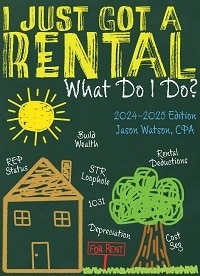 This KB article is an excerpt from our 480+ page book (some picture pages, but no scratch and sniff) which was updated October 6, 2025, and is available in paperback from Amazon, as an eBook for Kindle and as a PDF from ClickBank. We used to publish with iTunes and Nook, but keeping up with two different formats was brutal. You can cruise through these KB articles online, click on the fancy buttons below or visit our webpage which provides more information.
 |  |  |
| $19.95 | $15.95 | $12.95 |

Taxes can be tricky. Chat with a WCG human now and get questions answered.

Everything you need to help you launch your new business entity from business entity selection to multiple-entity business structures.
Designed for rental property owners where WCG CPAs & Advisors supports you as your real estate CPA.
Everything you need from tax return preparation for your small business to your rental to your corporation is here.