
Business Advisory Services
Everything you need to help you launch your new business entity from business entity selection to multiple-entity business structures.


Everything you need to help you launch your new business entity from business entity selection to multiple-entity business structures.

Designed for rental property owners where WCG CPAs & Advisors supports you as your real estate CPA.

Everything you need from tax return preparation for your small business to your rental to your corporation is here.
Table Of Contents
 By Jason Watson, CPA
Posted Monday, March 30, 2026
This one is a bit trickier, but it is a fantastic and wildly underutilized safe harbor for rental property owners. Now that you’ve defined your Unit of Property (UoP) in Step 2, you can test if your expenditure qualifies as routine maintenance.
According to the Tangible Property Regulations, you are not required to capitalize (and therefore may immediately expense) repairs that:
Note: For building structures and systems, that 10-year clock begins when the rental property is placed in service.
The rule explicitly reads “reasonably expect.” What if you expect to perform routine maintenance every 7 years, but by some miracle or sheer luck, you don’t actually do so, and it lasts 12 years? Do you lose the deduction?
It becomes a bit more challenging, but as long as you can demonstrate that, at the time of the expenditure, you reasonably expected to perform the activity more than once within 10 years, you have a valid argument to expense it.
Here is where skipping Step 2 (defining your UoP) will get you into trouble. The Routine Maintenance Safe Harbor has a pit of misery or hidden trapdoor baked into the rules: it explicitly does not apply if the work replaces a “major component or substantial structural part” of the UoP, which pushes you back into the improvement rules. Great! Not. How do you measure that?
You are never assessing a component in isolation; you are always assessing it against the whole system.
Let’s look at a water heater that you reasonably expect to replace every 7 years. Because 7 years is less than 10, it feels like an automatic win. But watch how the size of the UoP changes the outcome:
Both the frequency and the nature of the activity matter. Replacing small, repeating components fits this safe harbor much more naturally than replacing central or critical components, even if both occur on a similar timeline.
Granted, this example illustrates the bookends in an unnecessarily dramatic way. But what is not dramatic is that it underscores the challenge. If you are arguing the major component or materiality tax position, then you are in a facts and circumstances argument. Don’t take this as being a bad thing- it’s just a thing. While we all like bright lines and safe harbors, they don’t always afford the “yeah, but my facts are unique” argument.
Jason Watson, CPA, is a partner and the CEO of WCG CPAs & Advisors, a boutique yet progressive tax, accounting and rental property consultation firm with over 90 team members headquartered in Colorado serving real estate investors worldwide.


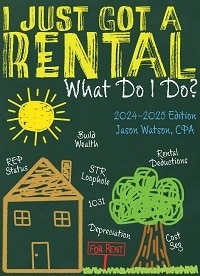 This KB article is an excerpt from our 480+ page book (some picture pages, but no scratch and sniff) which was updated October 6, 2025, and is available in paperback from Amazon, as an eBook for Kindle and as a PDF from ClickBank. We used to publish with iTunes and Nook, but keeping up with two different formats was brutal. You can cruise through these KB articles online, click on the fancy buttons below or visit our webpage which provides more information.
 |  |  |
| $19.95 | $15.95 | $12.95 |

Taxes can be tricky. Chat with a WCG human now and get questions answered.

Everything you need to help you launch your new business entity from business entity selection to multiple-entity business structures.
Designed for rental property owners where WCG CPAs & Advisors supports you as your real estate CPA.
Everything you need from tax return preparation for your small business to your rental to your corporation is here.