
Business Advisory Services
Everything you need to help you launch your new business entity from business entity selection to multiple-entity business structures.


Everything you need to help you launch your new business entity from business entity selection to multiple-entity business structures.

Designed for rental property owners where WCG CPAs & Advisors supports you as your real estate CPA.

Everything you need from tax return preparation for your small business to your rental to your corporation is here.
Table Of Contents
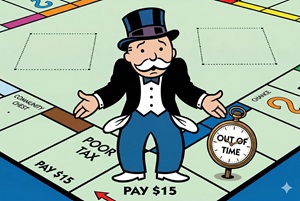 While it can be difficult to determine what time counts toward material participation, there are some clear examples of time that do not count. At times defining things in the negative is helpful. Here we go-
Wait! What? Hang in there… you’ll see that this is quite trivial, but you need to be aware just the same. IRS Publication 925 Passive Activity and At-Risk Rules, discusses work that is not normally performed by owners, as well as investor activities versus managerial activities. Here is another blurb from the lovely publication-
Work not usually performed by owners. You don’t treat the work you do in connection with an activity as participation in the activity if both of the following are true.
The work isn’t work that’s customarily done by the owner of that type of activity.
One of your main reasons for doing the work is to avoid the disallowance of any loss or credit from the activity under the passive activity rules.
That second component is your escape hatch, right? Do you cuff yourself to your desk as you admit to that? Sure, your 9-5 is anything but a home builder yet you are handy, and can lay down tile with the best of them. The IRS could contend that your tile work is not customarily done by a rental property owner (which is a stretch anyway) but to assert that you installed tile with the sole purpose of puffing up your hours is a virtually groundless assertion.
Said differently, sweat equity certainly counts unless your sole purpose of sweating is to increase participation time which rarely makes sense in the real world (and you would never admit to anyway). As such, this section is a bit silly since this rule is rarely triggered, but one to be aware of just the same.
What if you stink at home improvement? What if you are not a handy guy? In Lee v. Commissioner, Tax Court Memo. 2006-193, the real estate investor’s time log showed spending 24 hours to replace blinds, 56 hours to replace a kitchen faucet, and over 280 hours to wrap-up the financial statements for tax preparation. The Tax Court found the time entries to be unrealistic and not credible.
Yeah, no kidding. Can’t blame them.
In Moss v. Commissioner, 135 Tax Court 365 (2010), the rental property owner argued that he should be permitted to include hours spent “on call,” when a tenant could contact him if necessary. The court denied the tax position because the taxpayer was not actually performing services during those hours
While Moss was specifically fighting to count these hours toward his 750-hour Real Estate Professional Status (REPS) requirement, the court’s logic applies broadly to material participation analysis as well. The overarching lesson here is that watching football while waiting for the phone to ring is not participation, whether you are trying to hit 100 hours or 750 hours.
To repeat ourselves, and to buttress the court’s contention in Moss, Treasury Regulations Section 1.469-9(b)(4) states-
(4) Personal services.
Personal services means any work performed by an individual in connection with a trade or business. However, personal services do not include any work performed by an individual in the individual’s capacity as an investor as described in § 1.469-5T(f)(2)(ii).
Keep that personal services threshold in mind. Dreaming of your rentals doesn’t cut it. We wonder if the IRS would adopt Mohammed Ali’s saying “if you dream of beating me, you’d better wake up and apologize.” We digress.
Jason Watson, CPA, is a partner and the CEO of WCG CPAs & Advisors, a boutique yet progressive tax, accounting and rental property consultation and real estate CPA firm with over 90 team members and 7 partners headquartered in Colorado serving real estate investors worldwide.


 This KB article is an excerpt from our 530+ page book (yeah, thick, there are some picture pages, but no scratch and sniff) which was updated April 5, 2026, and is available in paperback from Amazon, as an eBook for Kindle and as a PDF from ClickBank. We used to publish with iTunes and Nook, but keeping up with two different formats was brutal. You can cruise through these KB articles online, click on the fancy buttons below or visit our webpage which provides more information.
 |  |  |
| $32.95 | $21.95 | $18.95 |

Taxes can be tricky. Chat with a WCG human now and get questions answered.

Everything you need to help you launch your new business entity from business entity selection to multiple-entity business structures.
Designed for rental property owners where WCG CPAs & Advisors supports you as your real estate CPA.
Everything you need from tax return preparation for your small business to your rental to your corporation is here.