
Business Advisory Services
Everything you need to help you launch your new business entity from business entity selection to multiple-entity business structures.


Everything you need to help you launch your new business entity from business entity selection to multiple-entity business structures.

Designed for rental property owners where WCG CPAs & Advisors supports you as your real estate CPA.

Everything you need from tax return preparation for your small business to your rental to your corporation is here.

WCG’s primary objective is to help you to feel comfortable about engaging with us
Table Of Contents
 By Jason Watson, CPA
Posted Sunday, April 5, 2026
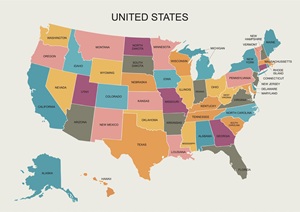
As of the 2026 tax year, most states still treat rental real estate in a fairly ordinary way: the income lands on Schedule E, flows to the state tax return, and life goes on. Yay! However, the states below are the ones worth flagging because they can impose an entity-level tax, a gross-receipts-style tax, or a separate business filing regime that goes beyond the usual set it and forget it approach.
A lot of the issues below arise because of owning and operating your rental property through an LLC, even those that are single-member and considered disregarded for tax purposes. We have a comparison table coming up in a bit.
Alabama is another state where an LLC itself can create a separate tax problem even when the federal tax return stays simple. The Alabama Department of Revenue says every corporation, limited liability entity, and disregarded entity doing business in Alabama or organized there must file an Alabama Business Privilege Tax return, so the trap is the entity-level filing and tax regime rather than the rental income itself.
California is the cleanest example of an LLC trap state. If an LLC is organized in California or is doing business there, California generally imposes its $800 annual franchise tax, and LLCs with enough California gross rental revenue, regardless of profits, can also face an additional LLC fee. This means a disregarded single-member LLC is not ignored for state-level cost purposes the way it is for federal income tax purposes.
D.C. is a trap jurisdiction because the filing regime is broader than many people expect. D.C.’s D-30 framework can treat rental or leasing activity as a “trade or business,” particularly when the activity rises above a passive investment level. The District has also issued guidance directing some rental property owners to prepare a D-30 using Schedule E figures, so this is not a jurisdiction to casually hand-wave away as “just passive rent.”
Hawaii is one of the most important activity-based states because its General Excise Tax (GET) applies to business activity, including the renting of real property, and it is imposed on gross income, not net rental profit. In other words, this is not just another income-tax state; Hawaii can add a separate tax layer to rental activity whether the property is owned personally or through an LLC.
New Hampshire is not a pure bright-line state. While it does have clear income thresholds for its Business Profits Tax (BPT) and Business Enterprise Tax (BET), those thresholds only apply after you determine whether your rental activity rises to the level of a trade or business. That initial determination is based on facts and circumstances such as the level of activity, number of properties, and degree of management, and not a simple rule.
In practice, a single long-term rental may remain outside the business classification, while multiple properties or short-term rental activity can push the owner into New Hampshire’s business tax regime, where the statutory thresholds then control whether a filing and tax are required.
Messy. New Hampshire gets three paragraphs.
New Mexico is often flagged because of its gross receipts tax (GRT), which applies broadly to business activity, including leasing property. However, long-term residential rentals are generally carved out through a deduction mechanism, meaning most traditional rental properties are not subject to GRT. That said, short-term rentals are a different story. Shocker, right? Rentals with an average guest stay of fewer than 30 days (not 30 days or less) are treated as a taxable business activity, and the gross receipts are subject to GRT (along with potential local lodging taxes as you would expect). In other words, New Mexico is mostly a non-issue for long-term rentals, but it becomes a true gross receipts tax state once you cross into short-term rental territory.
New York is less dramatic than California, but it is still a classic nuisance state for rental LLCs. A disregarded LLC with New York-source income is subject to the annual IT-204-LL filing fee, so the property may be “disregarded” federally while still creating a separate state filing obligation. For the 2025 tax year, the tax imposed for a single-member LLC is $25, but for multi-member LLCs (including those owned by spouses), the fee can increase significantly based on income levels.
Tennessee gets two paragraphs. Tennessee adds another layer of nuance because of its Franchise & Excise tax regime and the Family-Owned Non-Corporate Entity (FONCE) exemption. Long-term rental activity is generally treated as passive investment income and often qualifies for the exemption, meaning a FAE170 filing is not required.
However, short-term rentals can blur that line. As rental activity becomes more operational such as frequent tenant turnover, platform-based bookings, and added services, it begins to resemble a trade or business rather than passive investment. When that happens, the FONCE exemption may no longer apply, and the entity can become subject to Tennessee’s franchise and excise taxes.
The key is not the label “short-term rental,” but the level of activity behind it. It’s a bummer since Tennessee is a current hotspot for short-term rental investors, especially in the Smoky Mountains (Gatlinburg, Pigeon Forge, Sevierville), with strong year-round tourism. So, here’s to you unsuspecting real estate investor, be careful in Tennessee.
Texas is more filing-burden than tax-burden for many smaller landlords, but it still belongs on the list. For the 2026 report year, the no-tax-due threshold is $2.65 million, and entities below that threshold generally owe no franchise tax, but still have annual filing requirements. However, Texas eliminated the “No Tax Due” report beginning in 2024 and replaced it with a requirement to file a Public Information Report (PIR) or Ownership Information Report (OIR). In other words, even when no tax is owed, the LLC is still expected to file annually, creating compliance friction without a corresponding tax liability.
Washington is a strong reminder that the line between a rental activity and a business can matter more than the ownership structure. The Department of Revenue says renting or leasing real estate is generally not subject to B&O tax, but income from granting a license to use real property is subject to B&O tax, which is why shorter-term or hotel-like arrangements deserve a much closer look than ordinary long-term residential rentals.
Here are some takeaways for your ruminating pleasure-
Here is a table that is jam-packed and spans two pages. Good luck.
| State | LTR | STR | LTR w/ LLC |
STR w/ LLC |
Notes |
| Alabama | No | No | Yes | Yes | Business Privilege Tax applies to LLCs / disregarded entities doing business in Alabama. |
| California | No | No | Yes | Yes | $800 annual LLC tax, plus additional LLC fee at higher California gross rental revenue levels. |
| District of Columbia | No* | Yes | No* | Yes | D.C. UBT is the concern for active rental activity; traditional passive LTRs are usually the safer lane, while STRs are more likely to look like a business. |
| Hawaii | Yes | Yes | Yes | Yes | General Excise Tax (GET) is activity-based and can apply to rental receipts broadly. |
| New Hampshire | No* | No* | No* | No* | Hybrid state: first ask whether the rental rises to a business activity (facts and circumstances), then apply thresholds. |
| New Mexico | No* | Yes | No* | Yes | GRT is broad, but long-term residential rentals are generally removed through a deduction mechanism; rentals of less than 30 days are treated as taxable short-term lodging / vacation rental activity. |
| New York | No | No | Yes | Yes | IT-204-LL filing fee for disregarded LLCs with New York-source income. |
| Tennessee | No | No | Yes* | Yes* | FAE170 risk sits at the LLC level, but the FONCE exemption can remove passive, family-owned activity from the tax. Tennessee says substantially all activity must be passive investment income (or passive plus farming), and its guidance says some short-term vacation rentals may still qualify as passive depending on structure and activity level. So STRs are riskier, but not automatically taxable. |
| Texas | No | No | Yes* | Yes* | Mostly filing friction, not tax friction, for smaller landlords. Texas eliminated the old No Tax Due Report, but entities below the threshold still generally file a PIR or OIR annually. |
| Washington | No | Yes | No | Yes | B&O issue is mainly with STR / license-to-use activity; traditional LTRs are generally exempt. |
* Please see prior narrative for additional information.
Jason Watson, CPA, is a partner and the CEO of WCG CPAs & Advisors, a boutique yet progressive tax, accounting and rental property consultation and real estate CPA firm with over 90 team members and 7 partners headquartered in Colorado serving real estate investors worldwide.


 This KB article is an excerpt from our 530+ page book (yeah, thick, there are some picture pages, but no scratch and sniff) which was updated April 5, 2026, and is available in paperback from Amazon, as an eBook for Kindle and as a PDF from ClickBank. We used to publish with iTunes and Nook, but keeping up with two different formats was brutal. You can cruise through these KB articles online, click on the fancy buttons below or visit our webpage which provides more information.
 |
 |
 |
| $32.95 | $21.95 | $18.95 |

Taxes can be tricky. Chat with a WCG human now and get questions answered.

Everything you need to help you launch your new business entity from business entity selection to multiple-entity business structures.
Designed for rental property owners where WCG CPAs & Advisors supports you as your real estate CPA.
Everything you need from tax return preparation for your small business to your rental to your corporation is here.
WCG’s primary objective is to help you to feel comfortable about engaging with us