
Business Advisory Services
Everything you need to help you launch your new business entity from business entity selection to multiple-entity business structures.


Everything you need to help you launch your new business entity from business entity selection to multiple-entity business structures.

Designed for rental property owners where WCG CPAs & Advisors supports you as your real estate CPA.
Everything you need from tax return preparation for your small business to your rental to your corporation is here.

WCG’s primary objective is to help you to feel comfortable about engaging with us
Table Of Contents
 By Jason Watson, CPA
Posted Monday, March 30, 2026
Are your individual invoices small enough ($2,500 or less) to expense under the de minimis safe harbor? Are your total annual maintenance and repairs (which includes cleaning, by the way) under the strict $10,000 / 2% limit to deduct under the small taxpayer safe harbor?
The second one is frankly one that is often missed, but even the first one is missed quite a bit. We see lawnmowers and window air conditioners listed on depreciation schedules. Who knows? Maybe some tax professionals sell the valuation proposition by complicating the uncomplicated. Oh well.
Enough of the soap box- if you can slide your expenditure into one of these two safe harbors, you get to skip the rest of the madness and immediately reduce your rental income for the year. Yay!
We’ll start with the easiest one. As outlined in IRS Notice 2015-82, the IRS increased the de minimis safe harbor threshold from $500 to $2,500 per invoice or item for taxpayers in 2015. What does this mean? Anything you purchase including repairs and maintenance that are $2,500 or less per invoice or per item as substantiated on the invoice may be expensed and therefore deducted immediately (versus capitalizing as a fixed asset and depreciating).
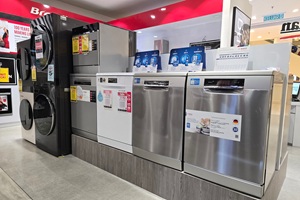
You buy four dishwashers for your 4-unit rental property. The total invoice is $4,000, however, each dishwasher is $1,000. As such, since $1,000 is under $2,500 (even in Canada that math is correct), you can use the de minimis safe harbor.
The de minimis safe harbor doesn’t change your ability to deduct repair and maintenance costs that don’t qualify under the de minimis safe harbor. Is that double-talk? Maybe. How about this- you can use other safe harbors should you be unable to qualify under de minimis. Some more yay!
Some fine print- If the de minimis safe harbor is elected under Treasury Regulations Section 1.263(a)-1(f), it must be applied to all materials and supplies, and more broadly to amounts paid to acquire or produce tangible property, that meet the de minimis requirements, except for those the taxpayer elects to capitalize and depreciate. This sounds ominous but is quite minor.
For the little investor in the real estate investment world, we have a practical safe harbor for expenditures that would otherwise be deemed improvements requiring them to be listed as a fixed asset and depreciated. Yuck.
Sidebar: Don’t blame us. The safe harbor is truly called small taxpayer. Ok, perhaps we piled on with the little investor comment. Just having a little tax and accounting fun. It should be called small asset safe harbor.
Two criteria-
If you meet these, then if the total amount paid during the taxable year for repairs, maintenance, cleaning, improvements, or similar activities performed on such building property stay under $10,000 or 2% of the unadjusted cost basis, whichever is more restrictive, you can expense all of it immediately as repairs and maintenance.
Sidebar: Maintenance is beyond screwdrivers and drywall. Turn-cleaning is a standard maintenance expense that keeps your rental property in normal operating condition. Time and therefore expense related to washing linens or mopping floors is viewed the same as swapping out a door lock.
Read that again. It is the total amount for the tax year, not per item or per occurrence.
Quick example- you buy a rental for $600,000 and the building is $400,000 of the overall purchase price. You spend $5,000 replacing the HVAC (a misnomer since HVAC is a system, and you probably replaced the air handler of the system, but we digress) and have an additional $1,000 in routine repairs. Let’s calculate your small taxpayer safe harbor ceiling:
Keep in mind that this is all repairs and maintenance combined. If you spent $5,000 on the HVAC unit, plus another $7,000 on other repairs and maintenance, then you exceed the limit. Blow past the limit by a dollar, and you are back in the full repairs versus improvements analysis. No partial credit. In other words, you cannot take $10,000 and expense it, and capitalize the remaining $2,000.
What if a part of your HOA dues includes maintenance of the landscaping? Things that make you go hmmmmm.
Both safe harbors require an annual election with your tax return; they do not apply automatically. Yawn.
Jason Watson, CPA, is a partner and the CEO of WCG CPAs & Advisors, a boutique yet progressive tax, accounting and rental property consultation and real estate CPA firm with over 90 team members and 7 partners headquartered in Colorado serving real estate investors worldwide.


 This KB article is an excerpt from our 530+ page book (yeah, thick, there are some picture pages, but no scratch and sniff) which was updated April 5, 2026, and is available in paperback from Amazon, as an eBook for Kindle and as a PDF from ClickBank. We used to publish with iTunes and Nook, but keeping up with two different formats was brutal. You can cruise through these KB articles online, click on the fancy buttons below or visit our webpage which provides more information.
 |
 |
 |
| $32.95 | $21.95 | $18.95 |

Taxes can be tricky. Chat with a WCG human now and get questions answered.

Everything you need to help you launch your new business entity from business entity selection to multiple-entity business structures.
Designed for rental property owners where WCG CPAs & Advisors supports you as your real estate CPA.
Everything you need from tax return preparation for your small business to your rental to your corporation is here.
WCG’s primary objective is to help you to feel comfortable about engaging with us