


DepreciMax Study: Ranking STR Markets by Bonus Depreciation
Table Of Contents
DepreciMax Study: Ranking STR Markets by Bonus Depreciation

The STR and Cost Seg Marriage
The short-term rental plus cost segregation combo is one of the few moves that lets a W-2 earner put a real dent in ordinary income. The mechanics are straightforward enough. If your average period of customer use is seven days or less, the activity is generally not treated as a rental activity under IRC Section 469. Yay! If you also materially participate, the resulting losses can be nonpassive and potentially offset W-2 wages, subject to the usual basis, at-risk, excess business loss and other limitations. The usual suspects, right?
That is the short-term rental loophole in a nutshell. A cost segregation study then carves out the 5, 7, and 15-year property hiding inside the building, and accelerated depreciation goes to work. With 100% bonus depreciation restored for qualifying property acquired and placed in service after January 19, 2025, that qualifying short-life property can generally be deducted in year one. Good stuff.
A New Study Tries to Rank the Markets
Recently a study from DepreciMax titled The State of Bonus Depreciation in US Short-Term Rentals — 2026 crossed our desk that ranks 197 US short-term rental markets across the country by their bonus depreciation potential. The pitch is that the hot STR markets everyone chases for revenue are not necessarily the best markets for tax. It is a clever idea backed by real work, nearly 1,700 individual listings estimated across those 197 markets, and it gets a few things right that most investors never think about. It also has some limits worth understanding before you lean on it, so let us lay out both.
What It Gets Right
Land ratio is the hero, and the study treats it that way. Land never depreciates, so the more of your purchase price that sits in dirt, the smaller the base for cost seg to work on. That is why the high-land trophy markets (Aspen, Malibu, the Hamptons, where land can run half the purchase price or more) score lower, while cheap-land rural lake and mountain markets score well. That is a real point, and worth making before anyone falls in love with a fancy zip code. 90210 baby!
State conformity is the second lever, and again the study is right to flag it. Bonus depreciation is a federal deduction. Whether the deduction also carries through to the state return depends on the state, and many states decouple from federal bonus depreciation or apply their own modifications. Most investors do not think about this until the state return looks very different from the federal one. Section 179? Most states have similar limitations here too (with New York State being one of the odd ducks with high Section 179 limitations). Additionally, Section 179 has its own problems when the business use falls to 50% or below.
The conclusion the study lands on is a good one. Screen the market first, then verify the STR property. A strong property in a weak market is the exception, not the rule.
So Where Do I Start Shopping?
We get this question constantly. Someone decides they want an STR and asks where to even begin. Honestly, that question is usually answered by your own life. Where do you like to vacation? Where might you retire someday, or want a second home you can use a few weeks a year? That is a perfectly good starting point, and for a lot of folks it is the right one.
But if you want the business deal and the tax perks alongside the personal use, a list like this gives you somewhere to start snooping. It points you toward markets where the cost segregation math tends to work, which is a reasonable filter to lay on top of “places I would actually want to own.” Start with the markets that clear on tax, cross-check them against where you would enjoy spending time, and you have narrowed a huge country down to a short list worth real diligence.
Just do not let the ranking do more work than it can. It is a place to start snooping, not a buy signal.
Sidebar: AirDNA is a great barometer for the operational efficacy of a short-term rental, but it’s figures tend to be lofty. In our opinion, take whatever you see and subtract 20%. Sure, with dynamic pricing technology you can rent out those Monday, Tuesday and Wednesday nights, but don’t anticipate that always working out (candidly, it is location location location dependent).
A Few Things to Keep in Mind
First, the medals are marketing, not tax law. The Diamond, Gold, Silver and Bronze labels are the study’s own screening tiers, set at bonus-eligible percentages that mark roughly the top slice of its distribution. A property at 23.9% does not suddenly become a bad deal, and one at 24.1% does not automatically become a good one. But we like diamonds and gold, and most things silver.
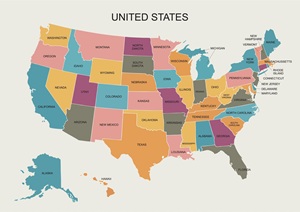 It is a tax map, not a demand map. The whole list sorts on bonus-eligible percentage (the BEP, and Yes, we just made that up) of purchase price. There is no occupancy, no nightly rate, no seasonality in it. It is not the inverse of a demand ranking, since the study does not measure demand at all, but it is an entirely different map. Markets tend to rank high because land is cheaper and the properties carry more bonus-eligible amenities, not because guests are lining up. Worth noting, several of the trophy markets investors chase for revenue, the Aspens and Hamptons of the world, land in the study’s own “markets that miss” list. Read it as a “where does cost seg pencil” screen, not a “where do STRs perform” screen, and you will use it right.
The dollars are modeled, not measured, and the classifications deserve a closer look. The estimates come from AI reading listing photos and applying assumed costs. The porcelain tile is the cleanest example. On the Joshua Tree case study, roughly $74,000 of porcelain tile flooring throughout lands in the 5-year bucket on a 2,847 square foot home, about $26 a foot. The per-foot number is fine. The classification is the soft spot, because permanently affixed tile is ordinarily part of the 39-year building, not 5-year personal property. The IRS Cost Segregation Audit Techniques Guide puts permanently installed ceramic and similar tile in Section 1250 building property. As such, be careful since not all that glitters is gold.
And tile is not the only one. The study also treats screened porches, decks, built-in fireplaces and inserts, custom cabinetry, built-in cubbies, timber accent ceilings, radiant floor heat and a few other fact-sensitive components as categorically bonus depreciation-eligible. Some of those can qualify depending on how they are built, what they do, and how they relate to the building. Others are ordinarily structural. The IRS residential rental matrix, for one, places built-in cabinetry and built-in fireplaces in Section 1250 building property. That does not make the estimate useless, but it does raise the possibility that some of the rankings are lifted by aggressive classifications, not merely rough pricing. Either way, treat the individual line items as preliminary rather than return-ready.
Sidebar: For most single-family homes, we see fully-engineered cost segregation studies coming in at 28% to 30% of the building value. This is from seeing hundreds of reports every year. Yes, every year.
One more bit of perspective. The preview does not hand over enough detail to fully test the statistical reliability of every ranking. We do not see market-level sample sizes or confidence ranges here, and the deeper calibration lives in separate technical materials. That does not make the list meaningless. On the contrary! Estimating nearly 1,700 listings across 197 markets is a real starting point, especially for someone who otherwise has no idea where to begin. Just treat the rankings asl screening data, not proof that market number 12 is definitively better than market number 18.
The Biggest Thing It Can’t See: Local Rules and HOAs
This is the big one, and it is not really a knock on the study so much as a reminder of what no photo model can catch. The ranking says nothing about whether you can legally run a short-term rental at the address. Its inputs are land ratios, listing photos, and state conformity, and none of those know about a city ordinance, a county permit cap, or an HOA covenant. Plenty of towns have moratoriums, permit limits, or primary-residence-only rules, and plenty of HOAs quietly ban rentals under 30 days no matter what the town allows. Yuck.
That matters more than the tax math, because it comes first. You could screen this list, find a top market, buy the perfect amenity-loaded cabin, and then learn the property cannot operate as an STR at all. At that point, the rental property might never be placed in service for the STR use you planned. Pivot to a traditional long-term rental and the losses will generally be passive unless another exception applies, such as real estate professional status, and the bonus depreciation deduction you bought the place for might be stuck carrying forward against future passive income. Confirm local ordinances and HOA rules before any of the tax math matters.
To its credit, the study never claims otherwise. There is an inferred “your mileage may vary” running under the whole thing, the same throwback disclaimer every car commercial has closed with for forty years. It is a prospecting estimate, not a filed number, and it tells you so.

I Just Got A Rental, What Do I Do?
 I just got a rental, what do I do? Purchasing a rental property is certainly challenging, but operating one to build wealth and find tax efficiency is equally challenging. This is our second book. Our first book, Taxpayer’s Comprehensive Guide to LLCs and S Corps, was first published in 2014 and was well-received by small business owners and tax professionals, so we thought a book on rental properties and real estate investments would be equally helpful. So, here we are with our second iteration, or the 2026 edition. We update it frequently throughout the year (last update was April 5, 2026).
Our rental property book starts with entity structures and moves into asset management such as acquisition, cost segregation, rental safe harbors, repairs versus improvements, accelerated depreciation, partial asset disposition, and 1031 like-kind exchange. From there we discuss various rental considerations like passive activity losses, short-term rental loophole, real estate professional status, and material participation including what time counts, and what time doesn’t count.
Finally, the good stuff! Rental property tax deductions such as travel, meals, automobiles, interest tracing, home office and common expenses. Fun!
It is available in paperback for $32.95 from Amazon and as an eBook for Kindle for 21.95. Our book is also available for purchase as a PDF from ClickBank for $18.95.




Related Blogs

One Email Address. Same People.

One Team, One Heartbeat: WCG Engagements Requires A 7216 Consent

The Two-Gate Trap: Why “Not a Rental Activity” Does Not Mean Nonpassive

Book Updates for Rental Property Owners: Cost Seg Mechanics Etc

AI Tax Prep in 2026: Not Quite There Yet

AI Tax Preparation and Automation: What It Means for You
Table Of Contents

Tax Planning Season
Tax planning season is here! Let's schedule a time to review tax reduction strategies and generate a mock tax return.

Bookkeeping Services
Tired of maintaining your own books? Seems like a chore to offload?