
Business Advisory Services
Everything you need to help you launch your new business entity from business entity selection to multiple-entity business structures.


Everything you need to help you launch your new business entity from business entity selection to multiple-entity business structures.

Designed for rental property owners where WCG CPAs & Advisors supports you as your real estate CPA.

Everything you need from tax return preparation for your small business to your rental to your corporation is here.
Table Of Contents
 By Jason Watson, CPA
Posted Sunday, December 14, 2025
Think of an empty taxicab that does not have a passenger but is ready and available for one (lack of market). Alternatively, a taxicab is getting an oil change (repairs) and cannot accept a passenger. This is vacant yet idle, and operating expenses (OpEx) and depreciation keep on truckin’. Slight mix of metaphors between taxicabs, rentals, and trucks, but you get it.
Painted. Clean. Sign in the yard. Waiting for a tenant. Fixing a minor leak under the toilet. Good to go!
You can also make the rental property unavailable for small periods of time to make repairs (beyond a simple leak but short of a renovation), or what the IRS calls managing, conserving and maintaining your investment, and be in the clear.
Your tenant moves out on Friday. You spend the weekend patching a few nail holes and touching up the paint (repairs). You put a “For Rent” sign in the yard on Monday. Tuesday comes and goes with no phone calls. Even though the property is vacant, it is only considered “Idle” due to a temporary lack of a market.
To stay on the right side, the property must be “Ready and Available.” If a tenant showed up with cash in hand, could they move in?
However, be careful with your semantics. While the IRS publications use “Idle” as a positive (depreciation allowed), some tax court judges have used “Idle” as a negative synonym for “Abandoned.” In those losing cases, the rental property was idle not because of a lack of market, but because of a lack of intent. The owner simply stopped trying.
But this is incorrect usage. It is like people saying IRA when they mean 401k. Sure, both are about retirement, but they are very much different vehicles.
Having said that, most tax court cases and the accounting industry use vacant versus idle when it comes to discussing rental properties. You just need to add the “yeah but” and say “vacant, yes, but it is vacant because I can’t find a tenant” or “vacant, yes, but it is temporarily offline” which we will tackle next, and it’s a good one.
As a reminder from our chapter on initial asset management, if your rental property is not “ready and available” for occupancy, operating expenses like utilities, HOA dues, and insurance are generally not deductible under IRC Section 195 and Revenue Ruling 99-23. While you might salvage some mortgage interest and property taxes on Schedule A (subject to interest and tax limitations), the better answer is to get the property “in-service” immediately.
You do not need professional staging or a VRBO listing to start the clock; you simply need a habitable dwelling and a genuine willingness to rent. For example, if you buy a ski condo in September, listing it immediately counts as “operating” even if the market is dead until Thanksgiving. The goal is to avoid “pre-rental status” by making the unit available first, even if you are simultaneously doing minor cosmetic work like painting.
Jason Watson, CPA, is a partner and the CEO of WCG CPAs & Advisors, a boutique yet progressive tax, accounting and rental property consultation firm with over 90 team members headquartered in Colorado serving real estate investors worldwide.


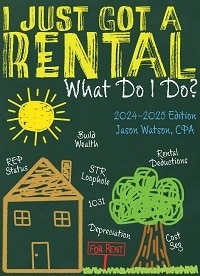 This KB article is an excerpt from our 480+ page book (some picture pages, but no scratch and sniff) which was updated October 6, 2025, and is available in paperback from Amazon, as an eBook for Kindle and as a PDF from ClickBank. We used to publish with iTunes and Nook, but keeping up with two different formats was brutal. You can cruise through these KB articles online, click on the fancy buttons below or visit our webpage which provides more information.
 |  |  |
| $19.95 | $15.95 | $12.95 |

Taxes can be tricky. Chat with a WCG human now and get questions answered.

Everything you need to help you launch your new business entity from business entity selection to multiple-entity business structures.
Designed for rental property owners where WCG CPAs & Advisors supports you as your real estate CPA.
Everything you need from tax return preparation for your small business to your rental to your corporation is here.